
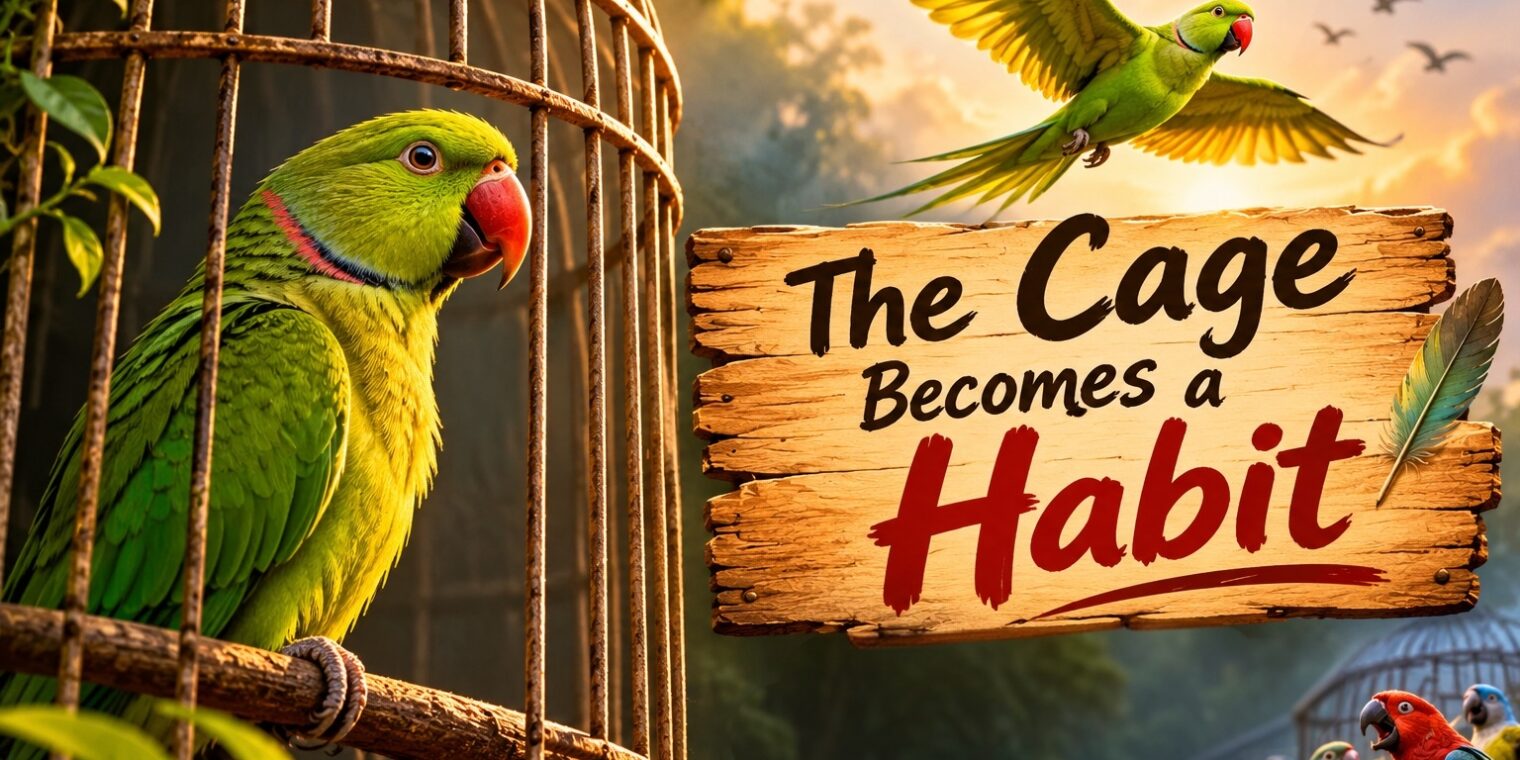
A story tells of a parrot who was kept in a cage for a year. After a year, her owner opened the door and set her free to fly into the sky. By then, the sky felt unfamiliar to her. She had forgotten how to be free up there, even though she had once spent hours flying through it with her pair, sharing happy times together. They had spent long stretches in the forest, eating together. Those moments had been the happiest part of her life, but sadly, a bird trapper caught her and later sold her to the
person who became her owner. He kept her in a comfortable cage, gave her good food, and cared for her, but she was still unhappy. All day, she sat sadly, facing the sky as if searching for someone. Gradually, she began eating the food her owner offered, but her sadness never went away. Seeing
this, he decided to open the cage and let her enjoy her freedom. As he watched, another parrot who had visited her for a while after he bought her eventually disappeared.
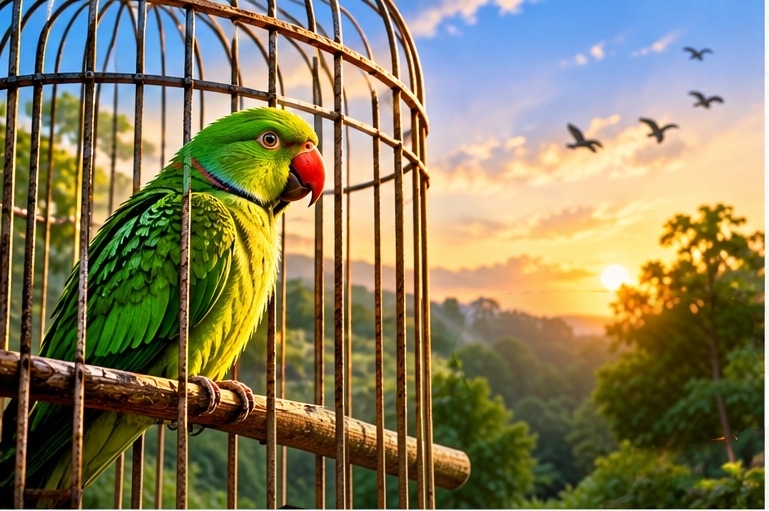
When he opened the cage, she stepped out and perched on the door for a while. Then she left the cage and sat nearby, exploring the area before flying around his home. After a while, she returned to the cage and went back inside. He was surprised and thought the bird had grown fond of him, but he
had misunderstood. Still, he cared deeply for her. The parrot wasn’t happy being confined, but she didn’t know how to handle her sudden freedom. By then, she had grown accustomed to the cage and found comfort in its coolness and security. She was used to sitting inside and enjoying the food
without having to search for it.
The owner wanted to make her happy, so he went to the market and bought another parrot about the same age as his own. He thought she might enjoy having a companion and could be lonely without one. To see how she would react, he placed the new parrot in a separate cage. At first, she
was curious about the newcomer, having not seen another parrot in a long time. Later, he decided to bring the parrots together so they could keep each other company, since he was also going to be away alone for a long time. At first, neither parrot was very friendly, but they
gradually grew close. They began chatting and enjoying their time together. They sometimes squabbled, usually over food: the new parrot was healthier and ate more, leaving the other with very little. He also quickly ate her food, which often led to fights.
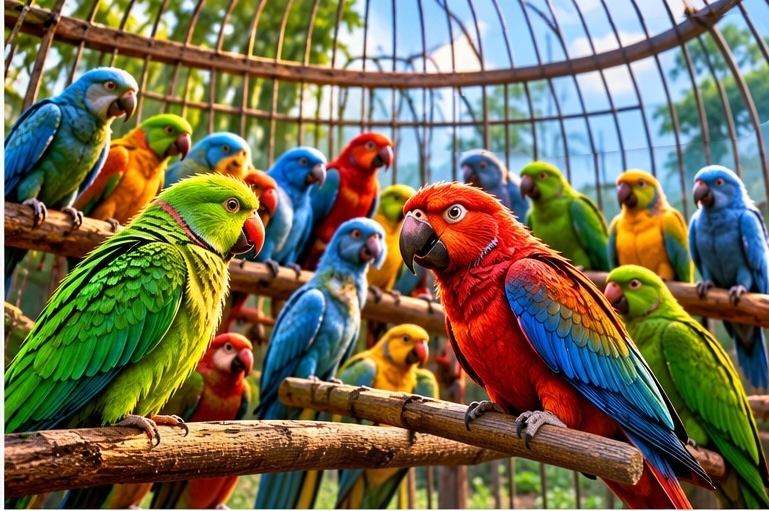
The owner grew more curious. He decided to build a larger cage and bring in more parrots, hoping the two original birds would feel happier and less lonely. He was also interested to see what would happen. The next day, he brought home a few more parrots of the same species. However, he
continued giving all five birds the same amount of food as before. The original parrots became very protective and kept the food for themselves. Although they were outnumbered, they ruled the cage, and fights soon became a regular occurrence.
After two or three days, he bought another group of five and placed them in the same cage. He increased the amount of food, but it was still only enough for five, not ten. The original five began to act as a group, keeping the food for themselves. The newcomers started fighting with them, but over
time, the original five gained the upper hand and became a close-knit group. They pushed the newcomers aside and treated them as second-class members. They told one another that they were the original group and questioned the newcomers’ purity because their color was slightly different.
The owner shared the story again. Within a month, he had bought five different types of parrots, bringing the total number up by 50. Later, breeding increased their numbers by another 100. At first, most groups carefully maintained their purity, but as the cages grew larger over time, the parrots
began mixing naturally, and the groups found it harder to stay separate. Fights were common, even though they usually had enough food.
As the owner grew older, he became increasingly frustrated and struggled to feed the birds properly. One day, he decided to open the cage and set them free. The next morning, he opened the cage and stepped aside, but none of the birds left. They were still arguing with one another because they
hadn’t been fed that morning—the owner had planned to free them instead. He began opening the cage, thinking the birds would have to fly away if they no longer had a home. But things didn’t go as he expected. The birds stayed put and began competing with their owner for
food, since he had been feeding them every day. Before long, they started attacking him and ventured into his home looking for more food, though they found very little. They attacked him again, leaving him badly injured.
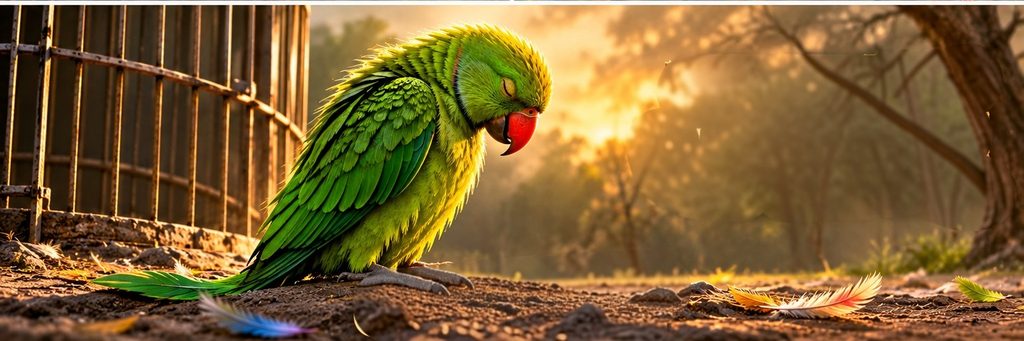
Later, they went outside. By then, they were growing hungry, but they didn’t know how to find food because they had never faced this situation before. By the end of the day, most of them were close to death. The next day, they began eating the bodies of dead birds, and this continued for several
days. Eventually, only the old bird remained. Within a week, she had lost all her friends and was once again alone. Heartbroken as she watched what had happened, she decided to take her own life. Although she had been alone at first, she had later made many friends. They still fought every day, but at least they were together. Now, living alone had become very difficult for her.