
In the old days, money had a very different position in households. Just like pulses and other essential items, money was also stored at home as a reserve. It was usually kept in the kitchen in Indian households, to be used in times of crisis. Many people were hesitant to put their money in banks. Their main concern was, what if the bank collapses? Some were simply psychologically uncomfortable with the idea.
People used to believe it was better to keep their belongings, especially money, with themselves. They did not want anyone else to keep a record of it. That is why, from the old feudal families to the common man, everyone preferred to keep their savings safely at home. In Kerala, it was quite common for elderly women to keep their money hidden in rice containers.
Though financial issues existed even then, the solutions were often physical and immediate. If someone needed money urgently, they would somehow find it somewhere in the house. Today, the situation is completely different. Back then, money was not a market player; it was simply a medium of exchange and was treated as a low-key necessity. People valued comfort and contentment over money. There was no major inflation or dramatic rise and fall in prices as we see today.
In fact, for a person who starts earning, the real challenge is not making money but saving it. I have seen many businessmen who hold crores in market value and have huge assets, yet own nothing personally. If anything goes wrong, they face the biggest problems of all, maintaining their lifestyle, repaying loans, and keeping up their market reputation. Money forces you to multiply it unless you hold the reins firmly. The liabilities and debts taken to maintain success often turn into villains when the market crashes. Until everything goes right, they are safe, but in today’s world, market disruptions have become a regular affair.
The concept of money itself has changed. Instead of being used as a medium of exchange, it has become a tool for multiplication. Many are no longer concerned about its real purpose.

In Bangalore, for instance, shop vendors collectively decided to boycott online payments like Google Pay and go back to cash transactions. They were receiving lakhs in GST repayments, yet interestingly, no one had actual currency in hand. Every single rupee had become virtual. Many people today even feel that carrying money is a burden. But the easiest way to spend money is through virtual transactions. The physical touch of handing over currency in a shop makes us feel the expense, that is the real difference.
Today, almost every individual either deposits money in the bank or converts it into some form of investment. Many choose fixed deposits, insurance, or other schemes. However, the deposit guarantee provided by banks is only up to five lakhs. Even this guarantee applies to the depositor, not to each account. Recently, it was declared that the government holds no responsibility for the public’s money.
This means that if a bank collapses, no matter how many accounts you hold, you will only receive a total of five lakhs.

Picture credit from pngtree.
Earlier, the government used to take certain measures, such as merging a failing bank with another nationalized bank, to control the impact of financial crises. But now, as per the new rule, unless a bank is being liquidated, no guarantee or insurance beyond five lakhs will be provided to a depositor.
Despite this, almost every government urges its citizens to deposit money rather than keep it in hand, encouraging people to participate in the developmental and infrastructural growth of the country through their savings. From a developmental point of view, this makes sense. But the risks involved are massive.
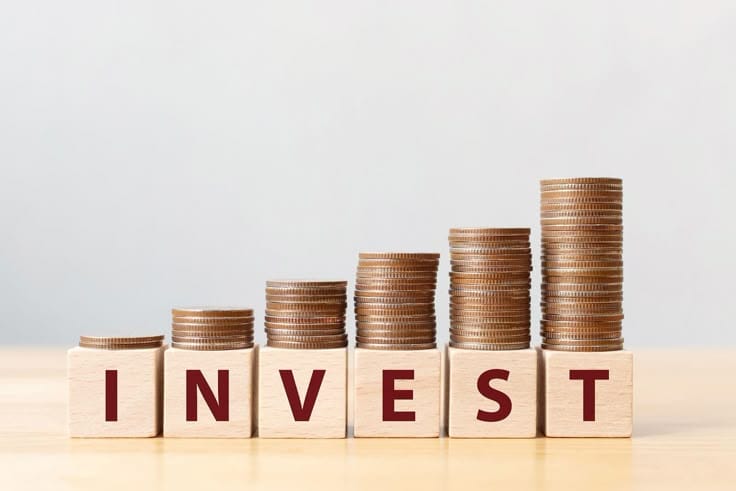
Investing money is not a bad idea, but one must take wise steps, diversifying across multiple avenues, choosing low-risk options, and considering government-backed schemes like those offered by the post office. Yet even with all these measures, liquid money remains important.
Since inflation is a reality in today’s world, if you do not invest, the money you hold will lose its value over time. Therefore, it is always wise to make money in a sensible manner, earn as much as you need, but remain aware of the thirst for greed and accumulation. Earn and spend wisely, so you do not feel suffocated or stingy despite having wealth. Invest not with the greed of making more and more, but with the intention of ensuring that the value of your money improves with time.